Buy technopa.eu ?
We are moving the project
technopa.eu .
Are you interested in purchasing the domain
technopa.eu ?
domain@kv-gmbh.de · 0541-91531010
Buy technopa.eu ?
Does precipitation occur?
Yes, precipitation occurs when water droplets or ice crystals fall from the atmosphere and reach the Earth's surface. This can happen in the form of rain, snow, sleet, or hail, depending on the temperature and atmospheric conditions. Precipitation is a key part of the Earth's water cycle and is essential for providing water to plants, animals, and human populations. **
What are precipitation fluctuations?
Precipitation fluctuations refer to the variations in the amount and intensity of precipitation over a specific time period. These fluctuations can include changes in the frequency of rainfall events, the duration of precipitation, and the amount of rainfall received. Precipitation fluctuations can have significant impacts on ecosystems, agriculture, water resources, and weather patterns. Understanding and monitoring these fluctuations is important for predicting and adapting to changes in climate and weather patterns. **


Similar search terms for Precipitation
Top-Angebote
Products related to Precipitation:
-
Hubble Connected Nursery Pal Crib Edition Smart Baby MonitorEnjoy a clear, overhead view of your baby with the new Hubble Nursery Pal Crib Edition. When the baby unit is attached to the adjustable crib mount, easily soothe your child to sleep with the new sleep trainer, which includes a soft, gentle night...249,99 $*Shipping: 0,00 $Secure redirect to the provider
-
Hubble Connected Nursery Pal Dual Vision Smart Baby MonitorIntroducing Nursery Pal Dual Vision!The 5-inch smart HD baby monitor features patent-pending dual lenses for simultaneous close-up and wide-angle viewing from the same device. Using AI Motion Tracking, the bottom camera automatically follows the...229,99 $*Shipping: 0,00 $Secure redirect to the provider
-
Hubble Connected Nursery Pal Link Premium Smart Baby MonitorNursery Pal Link Premium features a 5 Smart Baby Monitor. When at home, use the handheld parent unit to soothe your baby with the sweet sound of your voice using two-way talk communication, and track climate conditions with the preinstalled room...129,99 $*Shipping: 0,00 $Secure redirect to the provider


-
Why does precipitation form?
Precipitation forms when water vapor in the atmosphere condenses into liquid or solid water droplets and falls to the Earth's surface. This condensation occurs when warm, moist air rises and cools, causing the water vapor to condense around tiny particles in the air, such as dust or salt. The condensed water droplets then come together to form clouds, and when they become heavy enough, they fall to the ground as precipitation in the form of rain, snow, sleet, or hail. **
-
What is the precipitation amplitude?
Precipitation amplitude refers to the range of variation in the amount of precipitation that falls in a specific area over a given period of time. It is a measure of how much the precipitation levels fluctuate, from low to high, during a certain time frame. Understanding precipitation amplitude is important for assessing the variability in weather patterns and the potential impact on ecosystems, agriculture, and water resources in a region. By analyzing precipitation amplitude, scientists and meteorologists can better predict and prepare for extreme weather events such as droughts or heavy rainfall. **
-
What is the precipitation task?
The precipitation task refers to the measurement and prediction of the amount of water, in the form of rain, snow, sleet, or hail, that falls from the atmosphere to the Earth's surface. This task involves collecting data on precipitation patterns, analyzing historical records, and using various models and techniques to forecast future precipitation. Precipitation is a critical component of the Earth's water cycle and has significant impacts on agriculture, water resources, and natural ecosystems. Therefore, accurate prediction and understanding of precipitation patterns are essential for various sectors and industries. **
-
What is a precipitation radar?
A precipitation radar is a type of weather radar that is specifically designed to detect and measure the intensity of precipitation in the atmosphere. It uses radio waves to determine the location, movement, and intensity of rain, snow, sleet, or hail within a certain area. This information is important for weather forecasting, as it helps meteorologists track and predict the movement of storms and precipitation patterns. Precipitation radars are commonly used in meteorology, aviation, and hydrology to monitor and study precipitation events. **

How can I easily measure precipitation?
One easy way to measure precipitation is by using a rain gauge. Simply place the rain gauge in an open area away from obstructions, and it will collect and measure the amount of precipitation that falls. Another method is to use a measuring stick to measure the depth of water collected in a container after a rainfall. Both of these methods provide a simple and accurate way to measure precipitation. **
Where does the precipitation come from?
Precipitation comes from the condensation of water vapor in the atmosphere. When warm, moist air rises and cools, the water vapor in the air condenses into tiny water droplets or ice crystals, forming clouds. As these droplets or crystals grow larger and heavier, they eventually fall to the ground as precipitation in the form of rain, snow, sleet, or hail. This process is part of the Earth's water cycle, where water is constantly moving between the atmosphere, land, and oceans. **
Top-Angebote
Products related to Precipitation:
-
HALO BassiNest Connected Swivel Sleeper 3.0 Smart BassinetThe HALO BassiNest Connected Swivel Sleeper 3.0 is a smart bassinet that makes new parenthood a little easier. It combines the original BassiNests beloved 360 swivel and lowering wall with cutting-edge AutoSoothe technology, which automatically...399,99 $*Shipping: 0,00 $Secure redirect to the provider
-
Hubble Connected Nursery Pal Deluxe Smart Baby MonitorWith Nursery Pal Deluxe, baby monitors are no longer just for parents. This innovative Hubble product comes with a 5" HD color touch screen that doubles as an interactive viewer for children to use as they grow, including videos, picture books and...199,99 $*Shipping: 0,00 $Secure redirect to the provider
-
Hubble Connected Nursery Pal Crib Edition Smart Baby MonitorEnjoy a clear, overhead view of your baby with the new Hubble Nursery Pal Crib Edition. When the baby unit is attached to the adjustable crib mount, easily soothe your child to sleep with the new sleep trainer, which includes a soft, gentle night...249,99 $*Shipping: 0,00 $Secure redirect to the provider
-
Does precipitation occur?
Yes, precipitation occurs when water droplets or ice crystals fall from the atmosphere and reach the Earth's surface. This can happen in the form of rain, snow, sleet, or hail, depending on the temperature and atmospheric conditions. Precipitation is a key part of the Earth's water cycle and is essential for providing water to plants, animals, and human populations. **
-
What are precipitation fluctuations?
Precipitation fluctuations refer to the variations in the amount and intensity of precipitation over a specific time period. These fluctuations can include changes in the frequency of rainfall events, the duration of precipitation, and the amount of rainfall received. Precipitation fluctuations can have significant impacts on ecosystems, agriculture, water resources, and weather patterns. Understanding and monitoring these fluctuations is important for predicting and adapting to changes in climate and weather patterns. **
-
Why does precipitation form?
Precipitation forms when water vapor in the atmosphere condenses into liquid or solid water droplets and falls to the Earth's surface. This condensation occurs when warm, moist air rises and cools, causing the water vapor to condense around tiny particles in the air, such as dust or salt. The condensed water droplets then come together to form clouds, and when they become heavy enough, they fall to the ground as precipitation in the form of rain, snow, sleet, or hail. **
-
What is the precipitation amplitude?
Precipitation amplitude refers to the range of variation in the amount of precipitation that falls in a specific area over a given period of time. It is a measure of how much the precipitation levels fluctuate, from low to high, during a certain time frame. Understanding precipitation amplitude is important for assessing the variability in weather patterns and the potential impact on ecosystems, agriculture, and water resources in a region. By analyzing precipitation amplitude, scientists and meteorologists can better predict and prepare for extreme weather events such as droughts or heavy rainfall. **
Similar search terms for Precipitation
-
Hubble Connected Nursery Pal Dual Vision Smart Baby MonitorIntroducing Nursery Pal Dual Vision!The 5-inch smart HD baby monitor features patent-pending dual lenses for simultaneous close-up and wide-angle viewing from the same device. Using AI Motion Tracking, the bottom camera automatically follows the...229,99 $*Shipping: 0,00 $Secure redirect to the provider
-
Hubble Connected Nursery Pal Link Premium Smart Baby MonitorNursery Pal Link Premium features a 5 Smart Baby Monitor. When at home, use the handheld parent unit to soothe your baby with the sweet sound of your voice using two-way talk communication, and track climate conditions with the preinstalled room...129,99 $*Shipping: 0,00 $Secure redirect to the provider
-
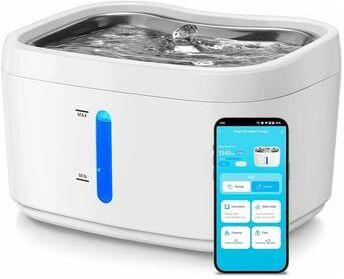
Inspire Essentials Smart App Connected Cat Water Fountain bGive your pet constant access to fresh, flowing water with a smart fountain designed for modern pet care. This automatic water fountain encourages healthy hydration by providing a continuous stream of filtered water that cats and dogs naturally...121,98 $*Shipping: 0,00 $Secure redirect to the provider
-
Hubble Connected Nursery Pal Deluxe Twin Smart Baby MonitorWith Nursery Pal Deluxe, baby monitors are no longer just for parents. This innovative Hubble product comes with a 5" HD color touch screen that doubles as an interactive viewer for children to use as they grow, including videos, picture books and...299,99 $*Shipping: 0,00 $Secure redirect to the provider
-
What is the precipitation task?
The precipitation task refers to the measurement and prediction of the amount of water, in the form of rain, snow, sleet, or hail, that falls from the atmosphere to the Earth's surface. This task involves collecting data on precipitation patterns, analyzing historical records, and using various models and techniques to forecast future precipitation. Precipitation is a critical component of the Earth's water cycle and has significant impacts on agriculture, water resources, and natural ecosystems. Therefore, accurate prediction and understanding of precipitation patterns are essential for various sectors and industries. **
-
What is a precipitation radar?
A precipitation radar is a type of weather radar that is specifically designed to detect and measure the intensity of precipitation in the atmosphere. It uses radio waves to determine the location, movement, and intensity of rain, snow, sleet, or hail within a certain area. This information is important for weather forecasting, as it helps meteorologists track and predict the movement of storms and precipitation patterns. Precipitation radars are commonly used in meteorology, aviation, and hydrology to monitor and study precipitation events. **
-
How can I easily measure precipitation?
One easy way to measure precipitation is by using a rain gauge. Simply place the rain gauge in an open area away from obstructions, and it will collect and measure the amount of precipitation that falls. Another method is to use a measuring stick to measure the depth of water collected in a container after a rainfall. Both of these methods provide a simple and accurate way to measure precipitation. **
-
Where does the precipitation come from?
Precipitation comes from the condensation of water vapor in the atmosphere. When warm, moist air rises and cools, the water vapor in the air condenses into tiny water droplets or ice crystals, forming clouds. As these droplets or crystals grow larger and heavier, they eventually fall to the ground as precipitation in the form of rain, snow, sleet, or hail. This process is part of the Earth's water cycle, where water is constantly moving between the atmosphere, land, and oceans. **
* All prices are inclusive of VAT and, if applicable, plus shipping costs. The offer information is based on the details provided by the respective shop and is updated through automated processes. Real-time updates do not occur, so deviations can occur in individual cases. ** Note: Parts of this content were created by AI.