Buy technopa.eu ?
We are moving the project
technopa.eu .
Are you interested in purchasing the domain
technopa.eu ?
domain@kv-gmbh.de · 0541-91531010
Buy technopa.eu ?
How do non-homologous recombination and homologous recombination work?
Non-homologous recombination involves the joining of two DNA molecules at non-homologous sequences, resulting in the insertion, deletion, or rearrangement of genetic material. This process is often error-prone and can lead to mutations. Homologous recombination, on the other hand, involves the exchange of genetic material between two similar DNA molecules, typically occurring during meiosis. This process is important for repairing DNA damage and ensuring genetic diversity. It involves the exchange of genetic material between homologous chromosomes, resulting in the formation of new combinations of genes. **
Can non-homologous chromosomes cross over?
No, non-homologous chromosomes cannot undergo crossing over during meiosis. Crossing over is a process that involves the exchange of genetic material between homologous chromosomes, which are chromosomes that are similar in size, shape, and gene content. Non-homologous chromosomes do not have the necessary similarity in order to undergo crossing over. **

Similar search terms for Non-homologous
Top-Angebote
Products related to Non-homologous:
-
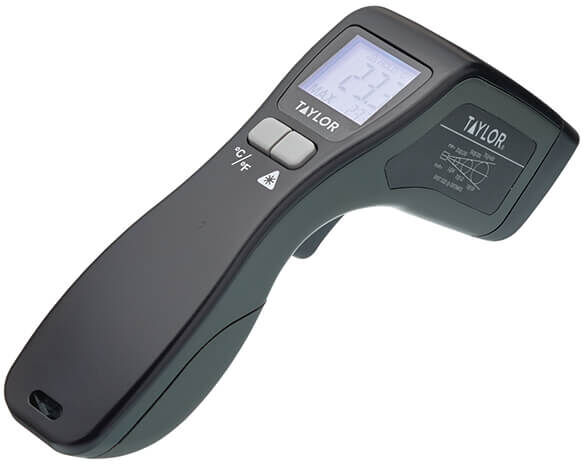
Taylor Pro Non-Contact Infrared Digital ThermometerThe Taylor Pro Digital Non-Contact Infrared Thermometer is a safe and hygienic way to take accurate temperature readings in an instant. Using infrared technology, this digital thermometer reduces the risk of cross food contamination as it doesn't have to come into contact with food. A quick squeeze of the trigger and this this thermometer will instantly provide a reading - from -45°C to 400°C (-49°F to 752°F). This infrared thermometer is particularly good for liquid recipes for which temperature is key, such as caramel, melted chocolate, sauces, syrups and soups. It can also be used to check if woks, pans and griddles are hot enough for frying, searing and sauteing, reducing the risk of scalds and burns. The Taylor Pro Digital Non-Contact Infrared Thermometer requires 2x AAA batteries (not supplied) and measures 10cm x 4cm x 15cm.39,99 £*Shipping: 3,50 £Secure redirect to the provider
-
Arctic Hayes Infrared Digital Thermometer – Non-ContactArctic Hayes Infrared Digital Thermometer – Non-Contact (AH650) The Arctic Hayes Infrared Digital Thermometer is a fast, accurate and reliable tool for measuring temperatures of hard-to-reach surfaces without physical contact. A unique 12-point circular laser targeting system gives precise, clear readings every time. With a temperature range of -30°C to +380°C (-22°F to 716°F), this professional-grade thermometer suits HVAC engineers, plumbers, electricians and general trades. Its bright LCD display, built-in alarms and compact design make it a practical choice for quick diagnostics, safety, accuracy and ease of use. Key Features & Benefits Non-Contact Measurement: Measure temperatures of hard-to-reach surfaces without direct contact. 12-Point Circu43,50 £*Shipping: 5,00 £Secure redirect to the provider
-
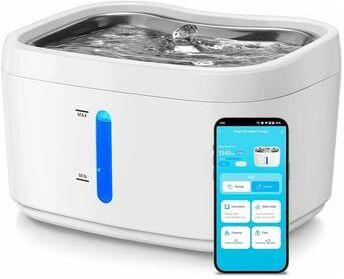
Inspire Essentials Smart App Connected Cat Water Fountain bGive your pet constant access to fresh, flowing water with a smart fountain designed for modern pet care. This automatic water fountain encourages healthy hydration by providing a continuous stream of filtered water that cats and dogs naturally...121,98 $*Shipping: 0,00 $Secure redirect to the provider

-
Are modifications homologous?
Modifications can be homologous if they are derived from a common ancestral modification and have similar functions in different species. For example, the presence of similar modifications in the wings of bats and birds, both of which enable flight, suggests homology. However, modifications can also be analogous, meaning they have similar functions but are not derived from a common ancestor. An example of analogous modifications is the wings of birds and insects, which have different evolutionary origins but serve the same function of flight. **
-
Why are bird feathers homologous?
Bird feathers are homologous because they all share a common evolutionary origin. They are derived from the same structure in the common ancestor of all birds. Despite the variations in size, shape, and color, bird feathers all serve the same fundamental purpose of providing insulation, aiding in flight, and attracting mates. This shared ancestry and function make bird feathers homologous structures. **
-
Are bat wings homologous or analogous?
Bat wings are homologous structures, meaning they share a common evolutionary origin with the wings of other mammals, such as humans and whales. This suggests that bats, humans, and whales all inherited their limb structure from a common ancestor. In contrast, analogous structures are those that have similar functions but different evolutionary origins, such as the wings of birds and insects. **
-
Which homologous organs exist in plants?
Homologous organs in plants are structures that have a common evolutionary origin but may have different functions. Examples of homologous organs in plants include the various types of leaves, such as simple leaves, compound leaves, and scale leaves, which all have a common origin but serve different functions in different plant species. Another example is the different types of flowers, which have a common origin but may have evolved to attract different pollinators or serve different reproductive strategies. Additionally, the various types of stems, such as rhizomes, stolons, and tubers, are also considered homologous organs in plants. **

Are Maybugs analogous or homologous animals?
Maybugs, also known as cockchafers, are not analogous or homologous to any other animals. They are a unique species of beetle belonging to the family Scarabaeidae. Analogous structures are similar in function but not in structure or evolutionary origin, while homologous structures are similar in structure and evolutionary origin but not necessarily in function. Maybugs do not share these similarities with any other animals, making them a distinct and separate species. **
What are the homologous series of alkanes?
The homologous series of alkanes are a group of organic compounds that share a similar structure and chemical properties. They are characterized by having single bonds between carbon atoms and the general formula CnH2n+2, where n represents the number of carbon atoms in the molecule. Examples of alkanes include methane (CH4), ethane (C2H6), propane (C3H8), butane (C4H10), and so on. As the number of carbon atoms increases, the physical properties of alkanes, such as boiling point and melting point, also change in a predictable manner. **
Top-Angebote
Products related to Non-homologous:
-
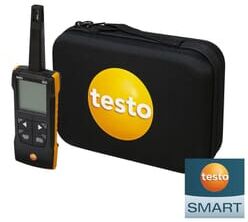
Testo 625 Digital Thermohygrometer – App ConnectedTesto 625 Digital Thermohygrometer with App Connection (0563 1625) The Testo 625 Digital Thermohygrometer is designed for quick, easy and precise measurement of air temperature and relative humidity. Well suited to assessing indoor air quality or maintaining optimal conditions in storage rooms, this compact device integrates with the Testo Smart App for enhanced functionality. The instrument automatically calculates dewpoint and wet bulb temperature, with time and point averages displayed instantly for quick assessment. Measurement data can be viewed as graphical curves within the app, saved, and managed alongside customer and site information, with reports emailed directly from the app. An audible alarm sounds if pre-set limit values are exceeded. Key Features & Benefits Precise M239,70 £*Shipping: 0,00 £Secure redirect to the provider
-
SmileLab Signature Advanced Whitening Toothpaste Non-Abrasive Formula 75mLA skin-care product. Maintain a radiant, kissable smile daily with Signature Advanced Whitening Toothpaste — a non-abrasive, high-end formula that delivers real whitening, superior cleaning, and lasting freshness. Provides genuine everyday whitening with advanced formula. Equipped with superior cleaning and purifying properties (ASC™ technology).8,58 £*Shipping: 5,34 £Secure redirect to the provider
-
Taylor Pro Non-Contact Infrared Digital ThermometerThe Taylor Pro Digital Non-Contact Infrared Thermometer is a safe and hygienic way to take accurate temperature readings in an instant. Using infrared technology, this digital thermometer reduces the risk of cross food contamination as it doesn't have to come into contact with food. A quick squeeze of the trigger and this this thermometer will instantly provide a reading - from -45°C to 400°C (-49°F to 752°F). This infrared thermometer is particularly good for liquid recipes for which temperature is key, such as caramel, melted chocolate, sauces, syrups and soups. It can also be used to check if woks, pans and griddles are hot enough for frying, searing and sauteing, reducing the risk of scalds and burns. The Taylor Pro Digital Non-Contact Infrared Thermometer requires 2x AAA batteries (not supplied) and measures 10cm x 4cm x 15cm.39,99 £*Shipping: 3,50 £Secure redirect to the provider
-
Arctic Hayes Infrared Digital Thermometer – Non-ContactArctic Hayes Infrared Digital Thermometer – Non-Contact (AH650) The Arctic Hayes Infrared Digital Thermometer is a fast, accurate and reliable tool for measuring temperatures of hard-to-reach surfaces without physical contact. A unique 12-point circular laser targeting system gives precise, clear readings every time. With a temperature range of -30°C to +380°C (-22°F to 716°F), this professional-grade thermometer suits HVAC engineers, plumbers, electricians and general trades. Its bright LCD display, built-in alarms and compact design make it a practical choice for quick diagnostics, safety, accuracy and ease of use. Key Features & Benefits Non-Contact Measurement: Measure temperatures of hard-to-reach surfaces without direct contact. 12-Point Circu43,50 £*Shipping: 5,00 £Secure redirect to the provider
-
How do non-homologous recombination and homologous recombination work?
Non-homologous recombination involves the joining of two DNA molecules at non-homologous sequences, resulting in the insertion, deletion, or rearrangement of genetic material. This process is often error-prone and can lead to mutations. Homologous recombination, on the other hand, involves the exchange of genetic material between two similar DNA molecules, typically occurring during meiosis. This process is important for repairing DNA damage and ensuring genetic diversity. It involves the exchange of genetic material between homologous chromosomes, resulting in the formation of new combinations of genes. **
-
Can non-homologous chromosomes cross over?
No, non-homologous chromosomes cannot undergo crossing over during meiosis. Crossing over is a process that involves the exchange of genetic material between homologous chromosomes, which are chromosomes that are similar in size, shape, and gene content. Non-homologous chromosomes do not have the necessary similarity in order to undergo crossing over. **
-
Are modifications homologous?
Modifications can be homologous if they are derived from a common ancestral modification and have similar functions in different species. For example, the presence of similar modifications in the wings of bats and birds, both of which enable flight, suggests homology. However, modifications can also be analogous, meaning they have similar functions but are not derived from a common ancestor. An example of analogous modifications is the wings of birds and insects, which have different evolutionary origins but serve the same function of flight. **
-
Why are bird feathers homologous?
Bird feathers are homologous because they all share a common evolutionary origin. They are derived from the same structure in the common ancestor of all birds. Despite the variations in size, shape, and color, bird feathers all serve the same fundamental purpose of providing insulation, aiding in flight, and attracting mates. This shared ancestry and function make bird feathers homologous structures. **
Similar search terms for Non-homologous
-
Inspire Essentials Smart App Connected Cat Water Fountain bGive your pet constant access to fresh, flowing water with a smart fountain designed for modern pet care. This automatic water fountain encourages healthy hydration by providing a continuous stream of filtered water that cats and dogs naturally...121,98 $*Shipping: 0,00 $Secure redirect to the provider
-
Happy Pet Pantry Non Contact Pet Ear Thermometer For Dogs & Cats Digital Veterinary Fever Monitor Non Contact Pet Ear Thermometer For Dogs & Cats Digital Veterinary Fever MonitorWhen your pet feels unwell, every second of uncertainty feels overwhelmingquick, accurate temperature checks can bring peace of mind. This pet ear thermometer is designed to deliver fast and reliable readings for dogs, cats, and puppies without...34,97 $*Shipping: 0,00 $Secure redirect to the provider
-
Uplift Essentials Smart App Connected Pet Water Fountain (2.5L) 4pcs FiltersTake the guesswork out of your pets hydration with the Smart AppConnected Pet Water Fountain. This advanced hydration system integrates seamlessly with your smartphone, allowing you to monitor your pet's water intake in realtime from anywhere....56,97 $*Shipping: 0,00 $Secure redirect to the provider
-
Are bat wings homologous or analogous?
Bat wings are homologous structures, meaning they share a common evolutionary origin with the wings of other mammals, such as humans and whales. This suggests that bats, humans, and whales all inherited their limb structure from a common ancestor. In contrast, analogous structures are those that have similar functions but different evolutionary origins, such as the wings of birds and insects. **
-
Which homologous organs exist in plants?
Homologous organs in plants are structures that have a common evolutionary origin but may have different functions. Examples of homologous organs in plants include the various types of leaves, such as simple leaves, compound leaves, and scale leaves, which all have a common origin but serve different functions in different plant species. Another example is the different types of flowers, which have a common origin but may have evolved to attract different pollinators or serve different reproductive strategies. Additionally, the various types of stems, such as rhizomes, stolons, and tubers, are also considered homologous organs in plants. **
-
Are Maybugs analogous or homologous animals?
Maybugs, also known as cockchafers, are not analogous or homologous to any other animals. They are a unique species of beetle belonging to the family Scarabaeidae. Analogous structures are similar in function but not in structure or evolutionary origin, while homologous structures are similar in structure and evolutionary origin but not necessarily in function. Maybugs do not share these similarities with any other animals, making them a distinct and separate species. **
-
What are the homologous series of alkanes?
The homologous series of alkanes are a group of organic compounds that share a similar structure and chemical properties. They are characterized by having single bonds between carbon atoms and the general formula CnH2n+2, where n represents the number of carbon atoms in the molecule. Examples of alkanes include methane (CH4), ethane (C2H6), propane (C3H8), butane (C4H10), and so on. As the number of carbon atoms increases, the physical properties of alkanes, such as boiling point and melting point, also change in a predictable manner. **
* All prices are inclusive of VAT and, if applicable, plus shipping costs. The offer information is based on the details provided by the respective shop and is updated through automated processes. Real-time updates do not occur, so deviations can occur in individual cases. ** Note: Parts of this content were created by AI.