Buy technopa.eu ?
We are moving the project
technopa.eu .
Are you interested in purchasing the domain
technopa.eu ?
domain@kv-gmbh.de · 0541-91531010
Buy technopa.eu ?
What is an isometry with non-orthogonal corners?
An isometry with non-orthogonal corners is a transformation that preserves distances and angles, but the corners of the shape are not at right angles to each other. This means that the shape is still congruent to its original form after the transformation, but the angles at the corners are not 90 degrees. Isometries with non-orthogonal corners can include rotations, reflections, translations, and glide reflections. These transformations are important in geometry and can be used to study the properties of shapes and figures. **
What is an isometry with non-orthogonal vertices?
An isometry with non-orthogonal vertices is a transformation that preserves distances and angles between points, but the vertices are not at right angles to each other. This means that the shape is still congruent to its original form, but the angles between the edges are not necessarily 90 degrees. Isometries with non-orthogonal vertices can include translations, rotations, reflections, and glide reflections. These transformations are important in geometry and can help us understand the properties of shapes in different orientations. **
Similar search terms for Non-orthogonal
Top-Angebote
Products related to Non-orthogonal:
-
Arctic Hayes Infrared Digital Thermometer – Non-ContactArctic Hayes Infrared Digital Thermometer – Non-Contact (AH650) The Arctic Hayes Infrared Digital Thermometer is a fast, accurate and reliable tool for measuring temperatures of hard-to-reach surfaces without physical contact. A unique 12-point circular laser targeting system gives precise, clear readings every time. With a temperature range of -30°C to +380°C (-22°F to 716°F), this professional-grade thermometer suits HVAC engineers, plumbers, electricians and general trades. Its bright LCD display, built-in alarms and compact design make it a practical choice for quick diagnostics, safety, accuracy and ease of use. Key Features & Benefits Non-Contact Measurement: Measure temperatures of hard-to-reach surfaces without direct contact. 12-Point Circu43,50 £*Shipping: 5,00 £Secure redirect to the provider
-
Inspire Essentials Smart App Connected Cat Water Fountain aGive your pet constant access to fresh, flowing water with a smart fountain designed for modern pet care. This automatic water fountain encourages healthy hydration by providing a continuous stream of filtered water that cats and dogs naturally...121,98 $*Shipping: 0,00 $Secure redirect to the provider
-
Happy Pet Pantry Non Contact Pet Ear Thermometer For Dogs & Cats Digital Veterinary Fever Monitor Non Contact Pet Ear Thermometer For Dogs & Cats Digital Veterinary Fever MonitorWhen your pet feels unwell, every second of uncertainty feels overwhelmingquick, accurate temperature checks can bring peace of mind. This pet ear thermometer is designed to deliver fast and reliable readings for dogs, cats, and puppies without...34,97 $*Shipping: 0,00 $Secure redirect to the provider


-
What is an orthogonal vector?
An orthogonal vector is a vector that is perpendicular to another vector. In other words, two vectors are orthogonal if their dot product is zero. Geometrically, this means that the two vectors form a 90-degree angle with each other. Orthogonal vectors are important in many areas of mathematics and physics, including linear algebra and vector calculus. **
-
Are linearly independent vectors always orthogonal?
No, linearly independent vectors are not always orthogonal. Linear independence means that no vector in the set can be written as a linear combination of the others, while orthogonality means that the vectors are perpendicular to each other. It is possible for linearly independent vectors to be orthogonal, but it is not a guarantee. For example, in three-dimensional space, the vectors (1, 0, 0), (0, 1, 0), and (0, 0, 1) are linearly independent and orthogonal, but the vectors (1, 1, 0) and (0, 1, 1) are linearly independent but not orthogonal. **
-
What does the term orthogonal mean?
The term orthogonal refers to two things being perpendicular or at right angles to each other. In mathematics, it often refers to vectors or matrices that are perpendicular to each other. In a broader sense, it can also refer to any two things that are independent or unrelated to each other. **
-
When are planes and lines orthogonal?
Planes and lines are orthogonal when the line is perpendicular to the plane. This means that the line forms a 90-degree angle with the plane, creating a right angle. In other words, the direction of the line is perpendicular to the direction of the plane. This relationship is important in geometry and engineering, as it affects the intersection and orientation of different geometric elements. **

How can one find non-digital hobbies?
One can find non-digital hobbies by exploring their interests and trying out different activities. This can include things like gardening, painting, knitting, cooking, or playing a musical instrument. Local community centers, hobby shops, and libraries often offer classes and workshops for various non-digital hobbies. Additionally, asking friends and family for recommendations or joining hobby groups can also help in discovering new non-digital hobbies. **
What is a proof of two orthogonal?
Two vectors are considered orthogonal if their dot product is equal to zero. This means that the angle between the two vectors is 90 degrees, forming a right angle. Mathematically, if vectors u and v are orthogonal, then u · v = 0. This property can be used to prove that two vectors are orthogonal by calculating their dot product and showing that it equals zero. **
Top-Angebote
Products related to Non-orthogonal:
-
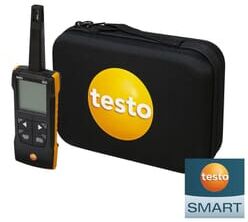
Testo 625 Digital Thermohygrometer – App ConnectedTesto 625 Digital Thermohygrometer with App Connection (0563 1625) The Testo 625 Digital Thermohygrometer is designed for quick, easy and precise measurement of air temperature and relative humidity. Well suited to assessing indoor air quality or maintaining optimal conditions in storage rooms, this compact device integrates with the Testo Smart App for enhanced functionality. The instrument automatically calculates dewpoint and wet bulb temperature, with time and point averages displayed instantly for quick assessment. Measurement data can be viewed as graphical curves within the app, saved, and managed alongside customer and site information, with reports emailed directly from the app. An audible alarm sounds if pre-set limit values are exceeded. Key Features & Benefits Precise M239,70 £*Shipping: 0,00 £Secure redirect to the provider
-
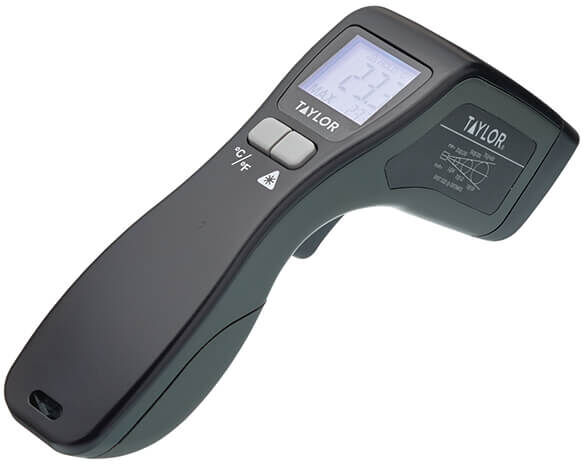
Taylor Pro Non-Contact Infrared Digital ThermometerThe Taylor Pro Digital Non-Contact Infrared Thermometer is a safe and hygienic way to take accurate temperature readings in an instant. Using infrared technology, this digital thermometer reduces the risk of cross food contamination as it doesn't have to come into contact with food. A quick squeeze of the trigger and this this thermometer will instantly provide a reading - from -45°C to 400°C (-49°F to 752°F). This infrared thermometer is particularly good for liquid recipes for which temperature is key, such as caramel, melted chocolate, sauces, syrups and soups. It can also be used to check if woks, pans and griddles are hot enough for frying, searing and sauteing, reducing the risk of scalds and burns. The Taylor Pro Digital Non-Contact Infrared Thermometer requires 2x AAA batteries (not supplied) and measures 10cm x 4cm x 15cm.39,99 £*Shipping: 3,50 £Secure redirect to the provider
-
Arctic Hayes Infrared Digital Thermometer – Non-ContactArctic Hayes Infrared Digital Thermometer – Non-Contact (AH650) The Arctic Hayes Infrared Digital Thermometer is a fast, accurate and reliable tool for measuring temperatures of hard-to-reach surfaces without physical contact. A unique 12-point circular laser targeting system gives precise, clear readings every time. With a temperature range of -30°C to +380°C (-22°F to 716°F), this professional-grade thermometer suits HVAC engineers, plumbers, electricians and general trades. Its bright LCD display, built-in alarms and compact design make it a practical choice for quick diagnostics, safety, accuracy and ease of use. Key Features & Benefits Non-Contact Measurement: Measure temperatures of hard-to-reach surfaces without direct contact. 12-Point Circu43,50 £*Shipping: 5,00 £Secure redirect to the provider
-
Inspire Essentials Smart App Connected Cat Water Fountain aGive your pet constant access to fresh, flowing water with a smart fountain designed for modern pet care. This automatic water fountain encourages healthy hydration by providing a continuous stream of filtered water that cats and dogs naturally...121,98 $*Shipping: 0,00 $Secure redirect to the provider
-
What is an isometry with non-orthogonal corners?
An isometry with non-orthogonal corners is a transformation that preserves distances and angles, but the corners of the shape are not at right angles to each other. This means that the shape is still congruent to its original form after the transformation, but the angles at the corners are not 90 degrees. Isometries with non-orthogonal corners can include rotations, reflections, translations, and glide reflections. These transformations are important in geometry and can be used to study the properties of shapes and figures. **
-
What is an isometry with non-orthogonal vertices?
An isometry with non-orthogonal vertices is a transformation that preserves distances and angles between points, but the vertices are not at right angles to each other. This means that the shape is still congruent to its original form, but the angles between the edges are not necessarily 90 degrees. Isometries with non-orthogonal vertices can include translations, rotations, reflections, and glide reflections. These transformations are important in geometry and can help us understand the properties of shapes in different orientations. **
-
What is an orthogonal vector?
An orthogonal vector is a vector that is perpendicular to another vector. In other words, two vectors are orthogonal if their dot product is zero. Geometrically, this means that the two vectors form a 90-degree angle with each other. Orthogonal vectors are important in many areas of mathematics and physics, including linear algebra and vector calculus. **
-
Are linearly independent vectors always orthogonal?
No, linearly independent vectors are not always orthogonal. Linear independence means that no vector in the set can be written as a linear combination of the others, while orthogonality means that the vectors are perpendicular to each other. It is possible for linearly independent vectors to be orthogonal, but it is not a guarantee. For example, in three-dimensional space, the vectors (1, 0, 0), (0, 1, 0), and (0, 0, 1) are linearly independent and orthogonal, but the vectors (1, 1, 0) and (0, 1, 1) are linearly independent but not orthogonal. **
Similar search terms for Non-orthogonal
-
Happy Pet Pantry Non Contact Pet Ear Thermometer For Dogs & Cats Digital Veterinary Fever Monitor Non Contact Pet Ear Thermometer For Dogs & Cats Digital Veterinary Fever MonitorWhen your pet feels unwell, every second of uncertainty feels overwhelmingquick, accurate temperature checks can bring peace of mind. This pet ear thermometer is designed to deliver fast and reliable readings for dogs, cats, and puppies without...34,97 $*Shipping: 0,00 $Secure redirect to the provider
-
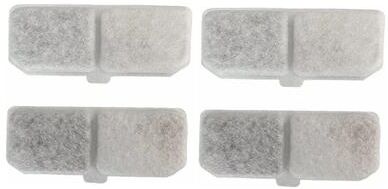
Uplift Essentials Smart App Connected Pet Water Fountain (2.5L) 4pcs FiltersTake the guesswork out of your pets hydration with the Smart AppConnected Pet Water Fountain. This advanced hydration system integrates seamlessly with your smartphone, allowing you to monitor your pet's water intake in realtime from anywhere....56,97 $*Shipping: 0,00 $Secure redirect to the provider
-
MasterClass Smart Space 3 Piece Non-Stick Induction Saucepan SetThis 3 piece MasterClass Smart Space Non-Stick Induction Saucepan set includes 3 pans (16cm, 18cm and 20cm), a one size fits all lid and a detachable handle. The stackable pans are non-stick and suitable for use on all hob types including induction and are suitable for use in the oven up to 200°C without the lid and handle. The lid is designed to fit all three pans securely and is made from glass, easy to view cooking whilst on the hob. The handle fits into all three pans easily with a one click action. The pans, handle and lid all stack neatly together for space saving storage. The pans and lid are dishwasher safe and the set is complete with a 20 year guarantee.66,39 £*Shipping: 0,00 £Secure redirect to the provider
-
What does the term orthogonal mean?
The term orthogonal refers to two things being perpendicular or at right angles to each other. In mathematics, it often refers to vectors or matrices that are perpendicular to each other. In a broader sense, it can also refer to any two things that are independent or unrelated to each other. **
-
When are planes and lines orthogonal?
Planes and lines are orthogonal when the line is perpendicular to the plane. This means that the line forms a 90-degree angle with the plane, creating a right angle. In other words, the direction of the line is perpendicular to the direction of the plane. This relationship is important in geometry and engineering, as it affects the intersection and orientation of different geometric elements. **
-
How can one find non-digital hobbies?
One can find non-digital hobbies by exploring their interests and trying out different activities. This can include things like gardening, painting, knitting, cooking, or playing a musical instrument. Local community centers, hobby shops, and libraries often offer classes and workshops for various non-digital hobbies. Additionally, asking friends and family for recommendations or joining hobby groups can also help in discovering new non-digital hobbies. **
-
What is a proof of two orthogonal?
Two vectors are considered orthogonal if their dot product is equal to zero. This means that the angle between the two vectors is 90 degrees, forming a right angle. Mathematically, if vectors u and v are orthogonal, then u · v = 0. This property can be used to prove that two vectors are orthogonal by calculating their dot product and showing that it equals zero. **
* All prices are inclusive of VAT and, if applicable, plus shipping costs. The offer information is based on the details provided by the respective shop and is updated through automated processes. Real-time updates do not occur, so deviations can occur in individual cases. ** Note: Parts of this content were created by AI.